 |
| Image via Florida Center for Allergy and Asthma Care |
Wednesday, May 18, 2016
Allergies

Tuesday, May 17, 2016
The Answer to the Organ Crisis: 3D Printing
 |
| Via 3Dprint.com |
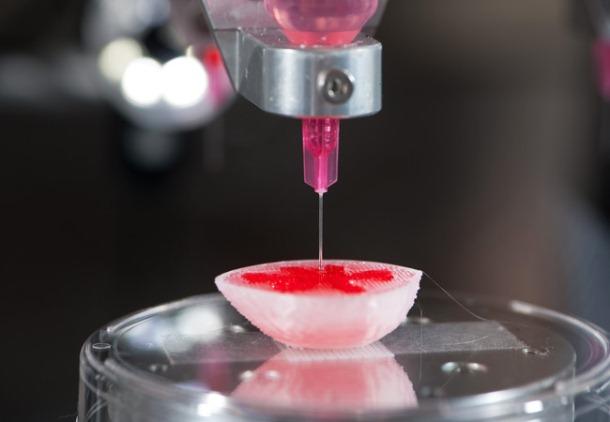
Sadly, its not as simple as that. Some of the time, the body will reject the created organ because it is not close enough to the source. Think about how the body won't accept normal transplants, the living transplant was grown on a human by a human, much less foreign than a piece of bio engineered substance, it must be done to perfection to be able to print a organ correctly. It is also extremely hard to create the actual functioning organ, this is the other big concern about organ transplants. We have to think about form and function for this, they can create the form of the organ but it is too difficult to create the exact function of an important organ like a liver or a heart. We can create tissue right now but are no where near close to getting a full organ. This could be the answer to all of our organ issues but it requires much more research before it can be fully put into plan and action. There is a possibility that we could never get the biological ink correct and these artificial organs will never be created perfectly and some people won't be able to accept them, but those are the chances we must take to save the thousands that die each year. First we must ask ourselves if it is really worth it to embark upon a research project that could have a dead-end. Then we must consider if maybe taking a whole new route to the problem is necessary, I believe that if we keep on looking for more opportunities we can discover something that will save thousands.
Embryonic Stem Cells

Image via Scientific American
Embryonic stem cells are pluripotent stem cells from the blastocyst of an embryo. For humans this is about 4 days after the egg is fertilized. Pluripotent cells are cells that are able to turn into any type of cell necessary in the body. They are valuable today because they are able to be used as a replacement for damaged tissue and research in understanding disease and finding drugs that may treat it. Growing these cells in certain organs are also useful in testing drugs. I think that embryonic stem cells should be able to be used in research and therapy as long as the donor is willing to give up her embryo, if the embryo is leftover from abortion or if it is a spare from In Vitro Fertilization (which is where an egg is manually fertilized). Using embryonic stem means having lower immunogenicity (immune response) compared to adult somatic stem cells which are scarce and have less pluripotency and induced pluripotent cells which have a high chance of immune system rejection. Through many case studies done on both animals and humans, embryonic stem cell treatments are proven to be safe and successful. (check out these studies to see some examples: Somatic-cell Nuclear Transfer; Human embryonic stem cells in the treatment of patients with spinal cord injury; Safety of human embryonic stem cells in patients with terminal/incurable conditions; Immunological Properties of Corneal Epithelial-Like Cells Derived from Human Embryonic Stem Cells). Those even in medical fields are shown to lack in background knowledge of the ethical implications and research in general of these cells (Perception and Knowledge About Stem Cell and Tissue Engineering Research: A Survey Amongst Researchers and Medical Practitioners in Perinatology) showing that many opinions and perspectives usually do not have sufficient evidence. In the USA embryonic stem cells have had multiple regulations regarding research, showing the gap in communication between policy makers and researchers as well. By closing this gap and educating those on the pros and cons of embryonic stem cells, the overall health of the population could benefit.
3D Bio-printing... Click print for a new organ?
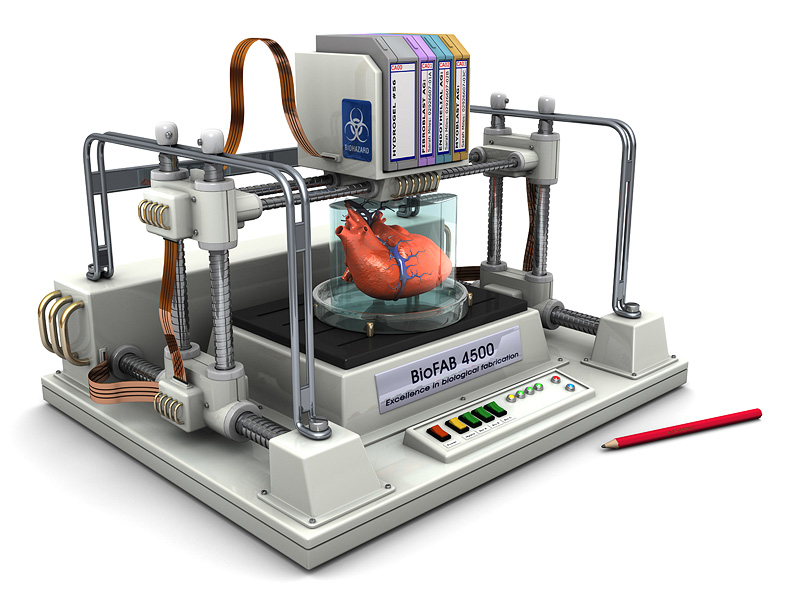
*please note that printing a heart is not yet possible. This is merely an illustration.*
Image from explainingthefuture.com
When you or someone you know is in need of an organ transplant, you go on a donor list and you wait for an organ that best matches yours. When you are presented with a match, there will aways be a risk involved with the transplant. Rejection of the organ can happen. What if there was a way that you could make the organ you desire from your own cells? All the problems with rejection would go away. This could become part of reality in the years to come. 3D bio-printing is much like normal 3D printing. The only difference is that bio-printing prints with living cells to make tissues and other structures. The process starts when some sample cells are taken from the specific organ. The cells are then rapidly multiplied. The now amplified amount of cells are then mixed into a gel, placed in a bioink cartridge, and then put into a printer. A computer with a 3D model of the desired organ sends info to the printer and the construction begins. The 3D Bio-printer begins construction layer by layer. At the end, you are left with an organ. Although we are not ready to print hearts and livers, we are currently capable of creating simpler things such as skin, cartilage, and simple hollow organs like the bladder. Solid organs like the heart and liver have not been made yet. These organs are simply too complex to print currently. When a block of tissue gets over an inch thick, cells on the inside start to die as there is no access to nutrients. Sadly, making microvascular networks for the organs is beyond our current technology. So far we can only make large vessels and hope that the cells construct the tiny capillaries. There are already plans to make printers that print skin directly onto burn victims. The development of organ printing is feasible within our lifetime.
Scoliosis: Brace vs. Spinal Fusion
 |
| Image via Ola Natural Healing |
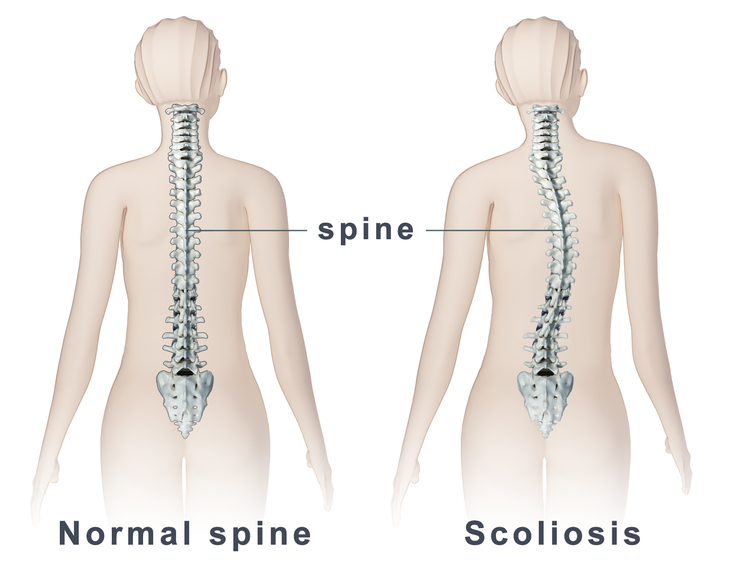
Depending on the degree of the curvature of the spine, scoliosis is usually treatable. There are two treatments that are commonly know: wearing a brace or having a spinal fusion surgery. If the degree of the curve is small, than most orthopedic doctors suggest doing some scoliosis-specific activities such as physical therapy. If the degree of the curve is somewhat large, but not small enough to fix with some physical therapy activities, then a spinal surgery is suggested. The spinal fusion surgery is a surgery in which orthopedic surgeon fuse some of the bones of the spine to keep it from curving even more. If the degree of the curve is substantially high, then most orthopedic doctors suggest wearing a plastic brace, sandwiching the abdominal region of the body both from the front and the back. The brace is usually used when the curvature angle is between 25-35º. However, if the brace has lowered the degree of the curvature by a certain amount, then that patient can undergo a spinal fusion surgery. Another treatment that can be used is the rod lengthening treatment which is also done surgical. This treatment is a more temporary treatment compared to the permanent status of the spinal fusion. In most cases, the rod lengthening is done before the spinal fusion so that during the time that the rod is in, it is able to control and maintain the curvature of the spine for sometime, and then the spinal fusion occurs to guarantee a more permanent state.
BRCA1 - Breast Cancer Gene
 |
| Image via Taofeminino |
BRCA1 is a tumor suppressor gene that is found on the chromosome 17p21. This means that the protein of this gene, BRCA1, repairs mainly DNA double strand breaks (DSBs) in the DNA of cells to prevent them from dividing uncontrollably. If there is a mutation in the coding for this protein, then the inhabitant's chances for developing breast or ovarian cancer increase exponentially. If there is mutation in different parts of this protein (for example, the region that control cell checkpoints during mitosis, which is the SQ cluster, can be mutated which is located within the structure of BRCA1). The many intricate parts to this protein cause the delicate nature of the protein because of the many parts of BRCA1 that can be affected.
A mutation in the BRCA1 protein causes approximately half of the hereditary breast cancer cases in the world. BRCA1 is an autosomal dominant trait. Every year, on average, one million women die of breast cancer which accounts for about 500,000 women dying from a mutation in their coding for the BRCA1 protein. The most common treatment for breast cancer is a single or double mastectomy, which is the removal of one or both breasts in order to lower the risk of developing breast cancer or to stop the spread of the tumor. One most public case of a double mastectomy is that of Angelina Jolie. She was predisposed to breast cancer as her family had a history of the illness and after undergoing a double mastectomy, her chances of developing breast cancer went from 87% to less than 5%. The effectiveness of this treatments is undeniable, however, some women prefer to risk getting the cancer because of their concern about the loss of their breasts. Although, many advances are being made in the prosthetics world with silicone or gel-like implants becoming available.
Vaccines: Yes or No

Gene Therapy to Treat Cystic Fibrosis
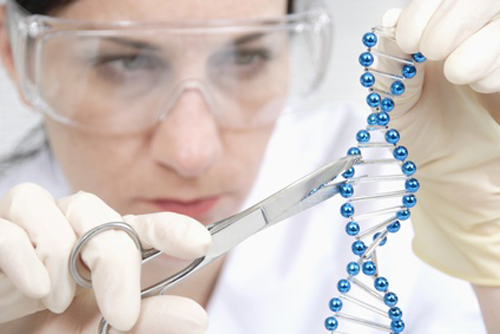 |
| *please note that this is dramatization of gene therapy not how it actually occurs* image from avensonline.org |
Do Stem Cells Increase Stroke Recovery?

Image via Reddit
Strokes kill almost 130,000 people in the United States each year out of over 200,000 people who experience them. and the ones who are fortunate enough to survive it have a difficult recovery, usually never fully recovering fully from the stroke. A stroke is when oxygen is cut off from the brain, usually because of a blood clot. Once oxygen is cut off from the brain, cells start dying rapidly, and these cells cannot recover. If a person survives a stroke they may experience difficulty walking, paralysis on one or both sides of the body, weak muscles, blurred or double vision, or speech loss, along with many other things. Sadly there are not many cures for this except physical therapy, until recently. This new treatment for stroke recovery is stem cells. These cells are taken from bone marrow or nerve cells from aborted fetuses. Stem cells are essentially blank cells, so this helps replace the cells that died during the stroke. The cells are extracted, then processed by a lab, then injected into either the patient's brain or spinal cord. The window for implanting these stem cells is short, scientists have not yet confirmed this exact time frame, but has been proven that the sooner the stem cells are implanted, the better they work. Tests have been done on rats, and humans, and both have showed these positive results. This is a vital strategy in stroke recovery and helping tens of thousands of Americans if it is continuing to be found successful. Stem cells in stroke recovery relate to what we have learned in biology this year because we learned how cells work in repairing and building in our bodies. This is just another way that cells help our bodies. The stem cells also trigger enzymes called Matrix Metalloproteinases (MMP). MMP is a key enzyme in tissue injury and remodeling. There is some debate about if this method is affective and whether it is okay to use cells from aborted fetuses in this recovery treatment for stroke patients. There is unknown results about how stem cells affect stroke victims in the long run, especially because this method just started being administered very recently. It is hard to prove that this method works also, because the person may just be improving on their own without the stem cell's help. Another point of debate is whether it is ethical to use the cells of aborted fetuses for stem cell recovery in stroke victims.
Saving Cells, and Grandma

Depression vs Feeling Depressed
 |
| Image via Jax |
Children and Progeria
 |
| Image via Progeria Prezi |
Progeria is a disease caused by a random mutation in your genes. This mutation alters the code for the gene that creates Lamin A, a protein that structures the nucleus. Because of this mutation, the nucleus is formed differently which causes people with Progeria to age rapidly and prematurely. Getting Progeria is extremely rare because this disease is only caused by one single mutation. It isn't hereditary so although rare, essentially anyone can have Progeria. The average lifespan of a person with Progeria is 13 years. Death is usually caused by stroke or other cardiovascular issues. Children who have Progeria usually have issues growing, trouble gaining weight, hair loss, aging skin, stiff joints, and heart issues. Until 2012, no sort of treatment worked attempting at reversing the negative affects of Progeria. In 2012, a clinical trial was created that tried a new medicine that was usually used with cancer patients called Lonafarnib. This medication was proved to slowly but surely make kids gain weight and reverse other symptoms. Some could argue against giving kids this medicine because their lifespan is already shortened by this disease. So why fight it if the option to enjoy an already shortened life is available? This is currently up for debate. With new medications working, the search to find the perfect solution for Progeria continues today.
ITP
 |
| Image via Novartis |
Genetic Modification/Engineering in Humans
As scientific technology develops, we are getting closer to being able to genetically modify humans. Genetically modifying humans is a process similar to in vitro fertilization. U.K scientists have already began genetically modifying human embryos. A huge benefit from genetic modification is crafting humans from the ground up, giving them specific traits that were desired. This would however, eventually destroy the evolutionary process because any human could change and adapt by having their DNA changed. We could eliminate numerous inherited diseases that run it families by modifying a child's genome to make him/her resistant through germ-line engineering, a process where sperm, egg or very early embryo is genetically modified, with the genes showing up in the child and the succeeding generation after. Also genetic engineering can be very impactful on our future's. With genetic engineering, it would be possible for us to engineer certain cells that would be resistant to certain types of diseases. DNA modification has benefits and threats to it as well. Not everything about DNA modification helps humanity. Many scientists worry about the ethics of DNA modification, and also the unwanted mutations it may occur. |

Monday, May 16, 2016
Elephants Mysterious Resistance To Cancer

Image Via HD Animal Wallpapers
Peto’s paradox asks why elephants have 100 times more cells than humans and similar lifespans, but only 4.5% of elephant deaths are attributed to cancer while 11%-25% of human deaths are attributed to cancer. Simple logic states that elephants would have a much higher probability of cancer purely due to their number of cells in their bodies. New research by two separate research teams is showing why this is true. This research shows that elephants have twenty copies of the gene TP53 while humans have only one. The TP53 gene codes for the protein p53. The protein p53 is a tumor suppressor protein. It is responsible for repairing cells and if needed sending them into apoptosis or cell death. Apoptosis reduces the risk of cancer by killing mutated cells that could turn into cancer cells.The research also indicates that the TP53 gene in elephants operates slightly differently than in humans. The TP53 in elephants more quickly resorts to apoptosis. This reduces the risk of cancer by more quickly killing mutated cells that could turn into cancer cells. This is a definitive answer to Peto's paradox. The next question researchers are asking is how this knowledge could be used to prevent cancer in humans. The research is just beginning and there is no one hypothetical solution. Researchers are still determining the best way to attempt this. Using this as a cancer treatment is years if not decades in the future. For now scientists are still trying to figure out the more intricate details of how elephants resist cancer.
Beta Blockers
 |
| Image via ConsumerReports |
Beta Blockers are drugs that block body’s receptors for adrenaline. When you take beta blockers the heart beats with less force and more slowly which then reduces blood pressure. Beta blockers have been used to treat diseases/illnesses connected to anxiety and tension, such as high blood pressure and irregular heart beat. Dr. Steven Nissen, chairman of cardiovascular medicine at the Cleveland Clinic, recommends "that if you have had a heart attack, particularly within the last two years you take a beta blocker because the evidence that showed that these drugs reduce the risk of death is actually very strong and has not been refuted by any newer studies." On the other hand, Mayo Clinic Staff, spread concern about beta blockers. They state, "beta blockers generally aren't used in people with asthma because of concerns that the medication may trigger severe asthma attacks. In people who have diabetes, beta blockers may block signs of low blood sugar, such as rapid heartbeat," limiting the type of people who can take this drug. They add, "you shouldn't abruptly stop taking a beta blocker because doing so could increase your risk of a heart attack or other heart problems." In my opinion, I would side with Dr. Steven Nissen, agreeing that use of beta blockers are beneficial for the right issues and can save lives. Also, I do understand that there are many side effects of beta blockers including, fatigue, cold hands, headaches, upset stomach, constipation, diarrhea, and dizziness. However, like any drug/medication there comes side affects and when one has such a terrible problem such as a heart attack it is worth it to take the chances of beta blockers.
Systemic Lupus Erythematosus (SLE)

Systemic Lupus Erythematosus (SLE) is an autoimmune disease where the T and B cells along with the Immune system do not recognize parts of the body as self and therefore attack the cells causing inflammation, pain and rashes. SLE can attack any parts of the body that it does not recognize and in many cases attacks main organs which can be fatal if not caught early enough. Symptoms of SLE are blood in urine, rashes, inflammation in joints or muscles and high blood pressure, these symptoms alone seem very benign so detecting SLE is difficult. SLE causes the T cells and B cells which are part of the Immune system to create antibodies and attack all foreign invaders in the body. When SLE effects people it is usually women because of how hormones interact with the production of the T cells. Women usually have an imbalance of hormones but when it gets to be extreme the T cells don't recognize what is body and what is foreign so it attacks all that it doesn't know. SLE is a very serious disease although it may not ever kill you and if it will it will be over time. SLE does not have a cure based on how every case is different and there is no good way to group all types together without damaging the body more.
Human Bionics, Augmentation, and Enhancements
 |
| Image Via: 8 Future Technologies And What They Mean For Humanity |
MMR Vaccine

Image via Activist Post
The MMR vaccination plays a huge role in the health of the general population today, and with vaccination rates dropping, many infections become more likely to spread. The measles that the MMR vaccination protects against is very deadly, as it attacks white blood cells. This means that all other immunities that have been built up during a person's life will be erased. The poor decision made by parents not to vaccinate their children can cause huge outbreaks of infections. The reason some people do not vaccinate is the belief that it causes autism which was proven by poorly conducted tests, and has since been disproven.
Like Father like Son
Like Father like Son

Image Via: NIH
I'm predisposed to alcohol dependancy. My grandfather and great grandfather are both alcoholics, and because of this my dad and I are both at risk of alcohol dependency, to make things worse we both have addictive personalities, or when we find something we like we do it a lot. Having known this my study is about the genetics related to mental health. I wanted to know more about this part of my family and see what kinds of risk I was in if I ever decided to drink. This connects to our learning about genetics this semester, as well as talks about how mental information is processed with neurons an neural transmitters.. There are five major disorders directly linked to a person’s chromosomes, Schizophrenia, bipolar disorder, depression, attention deficit hyperactivity disorder (ADHD) and autism. These four disorders share differences on four different chromosomes. The difference between a health human being and one with a mental illness of any kind, genetic or otherwise, doesn’t lie in their psyche. The difference exists within the synapse. Mr. Arnold talked about synapse briefly when talking about the brain, they are the small chemical spaces between the axons and the neurons in someone’s brain. These synapse release a chemical signal in order to tell the body how to feel or how to react. These chemicals are dopamine, serotonin, norepinephrine, etc. Genetic mental illness is passed down much like physical disorders, through chromosomes and alleles with dominant or recessive traits. When a person has a mental illness their synapse’s send too much or too little amount of a certain chemical signal. Too much dopamine, person might have abnormal behavior or schizophrenia. Too little serotonin, depression and suicidal thoughts. Too much norepinephrine, could lead to paranoia or increased adrenalin. When it comes to substance abuse the line becomes blurrier for a few reasons. 1. When a patient becomes addicted to a substance that was meant to treat them, the effects of the condition become self fueling, and often cause one another, and in some case’s many professionals say that some medications can cause totally new disorders when given to patients who have an addictive personality, like myself and many of our peers, or that are genetically predisposed to be addicted to substances, also like myself and probably others in our class.
Thursday, May 12, 2016

Epilepsy
 |
| Image Via WebMD |
Epilepsy is a type of brain disorder in which the brain has violent brain waves that are not common to the normal human body. A seizure is still unknown to how they are created through the body however doctors can say that they can be created from outside environment as said before or a bodily function that was traumatized, which would be seen in the head region. These outside sources can be created from alcohol, drugs, stress, time of day, or not enough sleep, there are other reasons for seizures but these are the most common. For years drugs were used as a way of subsiding and controlling these seizures but recently in the past 20 years a new treatment was found, the ketogenic treatment. This treatment consists of a mainly fat based diet with low-carbs. This helps because instead of using carbs as the main source of energy, the body uses kenotes. Kenotes are created through the burning of fats in the liver and are another source of energy. However, this does have side effects which do primarily effect cardio, which in turn will effect many athletes. Another treatment available a kind of medical marijuana that can be said to have helped from multiple tests. However younger children's parents are wary of this new treatment. What is Epilepsy? What treatments are available for this disorder? Which treatment is best to use to help people with Seizures?
How Pizza Rolls Changed the World - A Little Big History
 |
| Image via: WonderHowTo |

Thalassemia Disease
 |
| Image via Emaze |


The Entire World can Fit in the Back of Your Car

Image via Longnow.org
DNA data storage is the technology of the future, today. Scientists have been able to successfully store digital computer bytes (0s and 1s) in DNA by converting the bytes to a system where they correspond with a nucleotide. After the DNA is sequenced in a lab according to this system, there will be different parts to the completed strand, also known as a oligonucleotide (oligon for short). The first part of the oligon is a special address that helps the decoder determine which position and order that the messages are in. This is because many files are fairly large, so they are split up among different oligons for better organization. After initial sequencing the encoder must use a process known as PCR to multiply the amount of DNA and oligons that are there, exponentially. Primers attach to the part of the DNA to multiply, and separate it out. Then polymerase will help to finish the other side of the original DNA and the piece that was taken out. This is a process similar to DNA Replication, and it allows for each strand of DNA to have a few just like it. This way, if any strand mutates randomly or is read incorrectly by the machine, it can be compared to another strand and the mistake will be corrected. To get the message by comparing strands with each other, the decoder will need to use a key, which is essentially the password for a cipher of information. The key will allow the decoder to see the nucleotides in the correct order, thus allowing the decoder to read the message properly. In summary, DNA strands are written and then duplicated with PCR and primers during the encoding stage. To decode them in the proper order, all the strands are compared with their copies to make sure that there were no mistakes in reading. After this, the strands are organized according to the address they were given. Data stored in DNA may seem to be a technology that human’s are able to easily use, but the reality is that we are far from using DNA data storage. Currently the cost of each nucleotide is 10 cents, resulting in sequences that cost thousands to produce. In addition, these DNA strands must be sent to different facilities around the world to be encoded. At the current stage, DNA data can not be used efficiently, but if the trend of decreasing costs continues, DNA data may become available. Unfortunately, there is no way to tell that this decreasing price trend will continue, or where funding will come from.
The snow falling out of the sky is actually small dogs
 |
| Dogs |
Color Blindness
 |
| Image via Color Blind Awareness Color blindness is a sex-linked recessive defect which primarily affects males through alterations in the genes encoding color pigments. When a person is color blind they have a hard time seeing color or telling certain colors apart. Color blindness relates to mutations as it is the result of an altercation on the genes that code for the red and green color pigments. It also connects to evolution as these defects persisted throughout generations, suggesting that they might be beneficial, and they are continuing to evolve. For example, some people have extra copies of the green opsin gene (the gene that allows you to see green) and overtime this could lead to some people being able to see whole new spectrums of color. Color blindness may not seem like a big deal, save for the fact that your clothes might not match, but it actually stops people from pursuing certain jobs in the fields of aviation and fields where color-coding is heavily relied upon. Many new treatments are being developed to counteract the deficiency such as gene therapy, which was recently tested on squirrel monkeys who face the same problem and proved to be successful, but no permanent cure that is accessible by the general public yet exists. There are temporary fixes to the problem though, an example being colored contact lenses that enhance reds and greens, but in the process diminish yellows and blues so, in the end, the pros of the product are bound back by the cons. And while many people believe that researchers should be focusing on helping those with more severe deficiencies, there are hundreds of scientists dedicated to being able to better detect which type of color blindness someone has as well as improving their overall quality of life. My dad works in the field of ophthalmology, so my brother, sister, and I grew up hearing about eyes and patients that got their vision back from near blindness. Also, I've always been interested in color theory and perception, for example the question of 'is my red your red?' and the idea that different colors mean different things and some cultures can identify colors that we cannot. I believe that being able to see color is an amazing thing and the idea that we cannot see the whole spectrum of color (UV rays and infrared rays) just like we cannot see the 4th dimension is super interesting. This is why I firmly believe that researchers should continue to work on finding permanent cures to all types of color blindness so that everyone has the chance to see the world in all the colors that we possibly can. |


Stem Cell Research for MS Treatment
 |
| Image Via Everyday Health |
Scientific research has shown that the possibility of using stem cells to slow the effects of MS is a distinct possibility in the near future. MS, or multiple sclerosis is a disease that damages the sheaths to nerve cells in the brain and spinal chord. This disease can cause numbness, impairment of speech and of muscular coordination, blurred vision, and severe fatigue. The research being done currently is almost all experimental, but has incredible pontential to help rebuild the damaged nerve sheaths.
|
Altitude Training
 |
| Via The Natural Athlete's Clinic
In the world we live in today, with athletic events as competitive as the Olympics, athletes will do whatever it takes to get an edge on their performance and training. Altitude training is one of these conventional methods that is used by some of the biggest names in the professional sports world. The basis of belief is that by being in higher altitude, the body produces a hormone EPO which then allows for more red blood cells to be created meaning that when an athlete returns to sea level their endurance will increase. The whole idea of altitude training relies on the idea of oxygen deprivation (hypoxia) and how the body reacts to that. Understanding how different system of the body work together and react is key to understanding how something such as oxygen deprivation can lead to great effects in ability. In recent years the methods in which athletes go about practicing altitude training has become a major debate in the fitness and science community. Linked in the image above, articles show and explain how many studies with an absurd amount of variables leave many questions unanswered. In recent years the benefits and set backs have been discovered but strong enough research has not be completed. Many believe that the negatives out way the positives while others believe that opposite. The massive industry of mimicking altitude training is another huge issue in which the debate of how does it actually do so if at all. Also linked in the image above are arguments for why altitude training is dangerous by causing hypoxia and why some studies show altitude training working while others do not. Humans want what is best for their personal health so it is important that the science community continues to study so we know how to most effectively work and strengthen bodies.
|
Type 2 Diabetes

Genetic Clues for Type 2 Diabetes
As of this moment, there are a few ideas on how one gets type 2 diabetes. There are causes of type 2 diabetes after someone has been born, but it has been thought that a person can obtain type 2 diabetes before he/she has been born. It is said that a person can pass down a gene that increases the chances of someone getting type 2 diabetes. This gene can be passed down through generations and increase the odds of the children getting it. It is also said that mothers eating habits while carrying the child can increase the chance of the child having type 2 diabetes. Last it is said that if a person has different gene or set of genes, then it can also increase the chances of getting type 2 diabetes. The effects of type 2 diabetes on a person's body if untreated can be very bad. if untreated a person can potentially go blind, lose limbs(mostly feet), can lead to extream obesity or in some cases cause weight loss. This can be very bad for you because it needs sugar it can't get so it starts to take it from the fat in muscle tissue which overall will make you very weak and fragile.


Unique Survival Adaptations

Since the beginning of life on Earth, organisms have been evolving, acquiring traits over time that help them survive. Some of these are fascinating and all of them have one purpose: the survival of that organism. For starters, the Komodo Dragon's mouth utilizes one of the most complex venom systems on Earth, to stun their prey once they have been bitten. Second, there is the Basilisk Lizard, also known as the Jesus Lizard for its ability to "walk on water". Basilisk Lizards, in fact, do not walk on water, but rather run. Using incredible motor power and their tail for balance, the basilisks are able to evade predators by running over water. Third, there is the Immortal Jellyfish, which is capable of reverting back to polyp form even after sexual maturity. Essentially, this is the only immortal organism on this planet, unless it succumbs to disease or is killed by predators. Fourth, the Diving Bell Spider, which can create a web that holds in oxygen well enough that the spider only has to surface once a day to get air, meaning that it almost entirely lives its life under the water. Last but not least is the Mantis Shrimp, which may be the most extraordinary of all these organisms. The Mantis Shrimp has an appendage called the dactyl club, which can hit with the force of a rifle bullet and can shatter glass, and can be used by the Mantis Shrimp multiple times without causing damage to itself. This, coupled with the hard shell the mantis shrimp uses to protect itself from predators and other shrimps during mating season make the Mantis Shrimp an extremely formidable enemy. All of these organisms use their traits for survival in their environments.

Neuroscience
 |
| Image via McGill University |
Neuroscience is the study of the nervous system and the brain. When studying neuroscience, neuroscientists study things like how the brain works, what memories are, and how memories are stored. A debate that has been going on is whether or not scientists should edit the memory of humans. They hope to treat patients with Alzheimer's, dementia, etc. Also, they believe that this could help people with phobias, drug/alcohol addictions, bad habits, ptsd patients, etc. Although this seems good in theory, I think that if neuroscientists actually start to work on humans, it would turn out worse than expected. I think that if they decided to just bring back memories, this would work out good, but once they start removing memories, this is when the abuse of these treatments/drugs would begin. People would begin to use these to erase bad memories from their past, but this could entirely change the way they live. It has to do with ethics and drawing the line when it comes to science.


Wha...?
 Image via Giphy
No no no no no no no no no no no no no no no no no no no no no no no no no no no no no no no no no no no no no no no no no no no no no no no no no no no no no no no no no no no no no no no no no no no no no no no no no no no no no no no no no no no no no no no no no no no no no no no no no no no no no no no no no no no no no no no no no no no no no no no no no no no no no no no no no no no no no no no no no no no no no no no no no no no no no no no no no no no no no no no no no
Genetic Doping
 |
| Image Via steroiduse.com |
Progeria - edit title later
 |
| Image via Dog Time |
The effects on babies born to parents with STD's while pregnant and through delivery.

Image from sheknows.com
There are multiple effects on babies born to mothers who have STD's during pregnancy and delivery. I'll be talking about the effects on the babies and prevention tips for chlamydia and herpes specifically.
Subscribe to:
Posts (Atom)