 |
| Image via Florida Center for Allergy and Asthma Care |
Wednesday, May 18, 2016
Allergies

Tuesday, May 17, 2016
The Answer to the Organ Crisis: 3D Printing
 |
| Via 3Dprint.com |
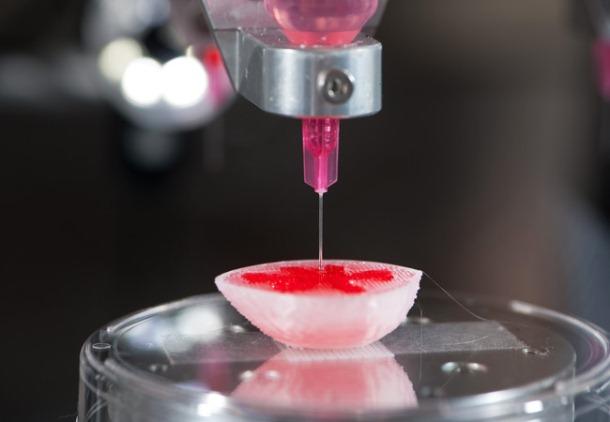
Sadly, its not as simple as that. Some of the time, the body will reject the created organ because it is not close enough to the source. Think about how the body won't accept normal transplants, the living transplant was grown on a human by a human, much less foreign than a piece of bio engineered substance, it must be done to perfection to be able to print a organ correctly. It is also extremely hard to create the actual functioning organ, this is the other big concern about organ transplants. We have to think about form and function for this, they can create the form of the organ but it is too difficult to create the exact function of an important organ like a liver or a heart. We can create tissue right now but are no where near close to getting a full organ. This could be the answer to all of our organ issues but it requires much more research before it can be fully put into plan and action. There is a possibility that we could never get the biological ink correct and these artificial organs will never be created perfectly and some people won't be able to accept them, but those are the chances we must take to save the thousands that die each year. First we must ask ourselves if it is really worth it to embark upon a research project that could have a dead-end. Then we must consider if maybe taking a whole new route to the problem is necessary, I believe that if we keep on looking for more opportunities we can discover something that will save thousands.
Embryonic Stem Cells

Image via Scientific American
Embryonic stem cells are pluripotent stem cells from the blastocyst of an embryo. For humans this is about 4 days after the egg is fertilized. Pluripotent cells are cells that are able to turn into any type of cell necessary in the body. They are valuable today because they are able to be used as a replacement for damaged tissue and research in understanding disease and finding drugs that may treat it. Growing these cells in certain organs are also useful in testing drugs. I think that embryonic stem cells should be able to be used in research and therapy as long as the donor is willing to give up her embryo, if the embryo is leftover from abortion or if it is a spare from In Vitro Fertilization (which is where an egg is manually fertilized). Using embryonic stem means having lower immunogenicity (immune response) compared to adult somatic stem cells which are scarce and have less pluripotency and induced pluripotent cells which have a high chance of immune system rejection. Through many case studies done on both animals and humans, embryonic stem cell treatments are proven to be safe and successful. (check out these studies to see some examples: Somatic-cell Nuclear Transfer; Human embryonic stem cells in the treatment of patients with spinal cord injury; Safety of human embryonic stem cells in patients with terminal/incurable conditions; Immunological Properties of Corneal Epithelial-Like Cells Derived from Human Embryonic Stem Cells). Those even in medical fields are shown to lack in background knowledge of the ethical implications and research in general of these cells (Perception and Knowledge About Stem Cell and Tissue Engineering Research: A Survey Amongst Researchers and Medical Practitioners in Perinatology) showing that many opinions and perspectives usually do not have sufficient evidence. In the USA embryonic stem cells have had multiple regulations regarding research, showing the gap in communication between policy makers and researchers as well. By closing this gap and educating those on the pros and cons of embryonic stem cells, the overall health of the population could benefit.
3D Bio-printing... Click print for a new organ?
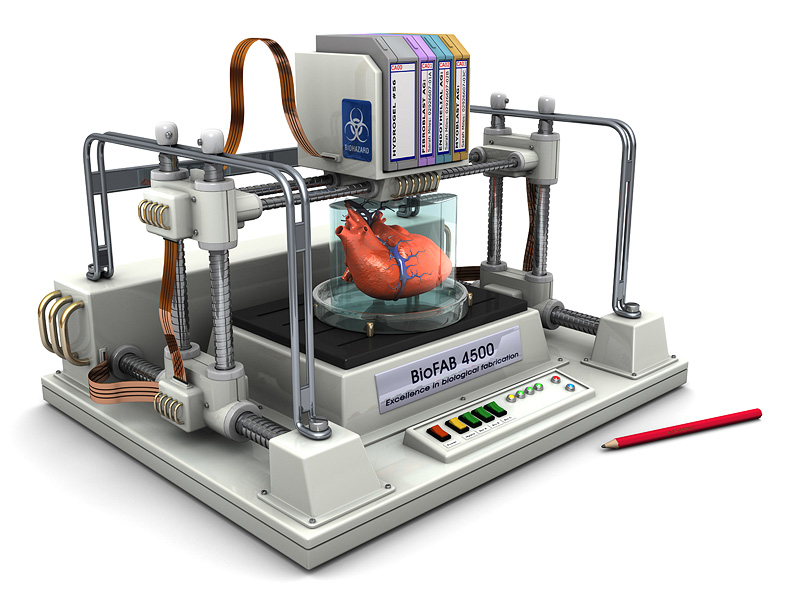
*please note that printing a heart is not yet possible. This is merely an illustration.*
Image from explainingthefuture.com
When you or someone you know is in need of an organ transplant, you go on a donor list and you wait for an organ that best matches yours. When you are presented with a match, there will aways be a risk involved with the transplant. Rejection of the organ can happen. What if there was a way that you could make the organ you desire from your own cells? All the problems with rejection would go away. This could become part of reality in the years to come. 3D bio-printing is much like normal 3D printing. The only difference is that bio-printing prints with living cells to make tissues and other structures. The process starts when some sample cells are taken from the specific organ. The cells are then rapidly multiplied. The now amplified amount of cells are then mixed into a gel, placed in a bioink cartridge, and then put into a printer. A computer with a 3D model of the desired organ sends info to the printer and the construction begins. The 3D Bio-printer begins construction layer by layer. At the end, you are left with an organ. Although we are not ready to print hearts and livers, we are currently capable of creating simpler things such as skin, cartilage, and simple hollow organs like the bladder. Solid organs like the heart and liver have not been made yet. These organs are simply too complex to print currently. When a block of tissue gets over an inch thick, cells on the inside start to die as there is no access to nutrients. Sadly, making microvascular networks for the organs is beyond our current technology. So far we can only make large vessels and hope that the cells construct the tiny capillaries. There are already plans to make printers that print skin directly onto burn victims. The development of organ printing is feasible within our lifetime.
Scoliosis: Brace vs. Spinal Fusion
 |
| Image via Ola Natural Healing |
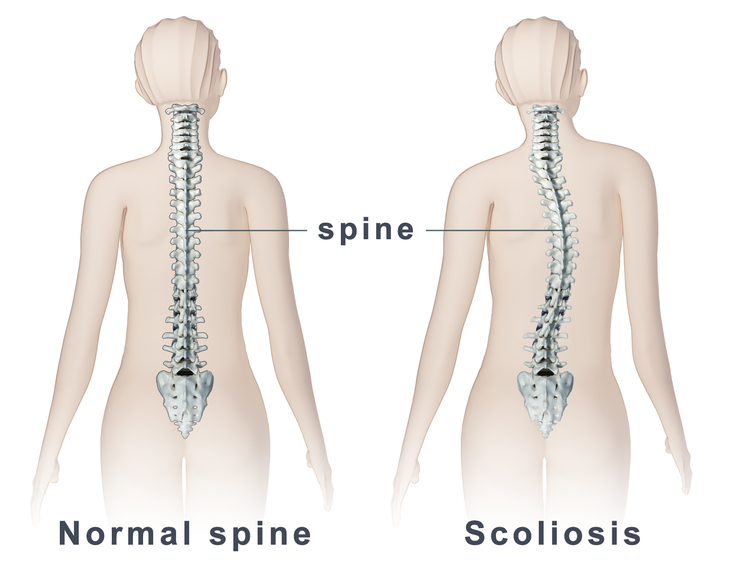
Depending on the degree of the curvature of the spine, scoliosis is usually treatable. There are two treatments that are commonly know: wearing a brace or having a spinal fusion surgery. If the degree of the curve is small, than most orthopedic doctors suggest doing some scoliosis-specific activities such as physical therapy. If the degree of the curve is somewhat large, but not small enough to fix with some physical therapy activities, then a spinal surgery is suggested. The spinal fusion surgery is a surgery in which orthopedic surgeon fuse some of the bones of the spine to keep it from curving even more. If the degree of the curve is substantially high, then most orthopedic doctors suggest wearing a plastic brace, sandwiching the abdominal region of the body both from the front and the back. The brace is usually used when the curvature angle is between 25-35º. However, if the brace has lowered the degree of the curvature by a certain amount, then that patient can undergo a spinal fusion surgery. Another treatment that can be used is the rod lengthening treatment which is also done surgical. This treatment is a more temporary treatment compared to the permanent status of the spinal fusion. In most cases, the rod lengthening is done before the spinal fusion so that during the time that the rod is in, it is able to control and maintain the curvature of the spine for sometime, and then the spinal fusion occurs to guarantee a more permanent state.
BRCA1 - Breast Cancer Gene
 |
| Image via Taofeminino |
BRCA1 is a tumor suppressor gene that is found on the chromosome 17p21. This means that the protein of this gene, BRCA1, repairs mainly DNA double strand breaks (DSBs) in the DNA of cells to prevent them from dividing uncontrollably. If there is a mutation in the coding for this protein, then the inhabitant's chances for developing breast or ovarian cancer increase exponentially. If there is mutation in different parts of this protein (for example, the region that control cell checkpoints during mitosis, which is the SQ cluster, can be mutated which is located within the structure of BRCA1). The many intricate parts to this protein cause the delicate nature of the protein because of the many parts of BRCA1 that can be affected.
A mutation in the BRCA1 protein causes approximately half of the hereditary breast cancer cases in the world. BRCA1 is an autosomal dominant trait. Every year, on average, one million women die of breast cancer which accounts for about 500,000 women dying from a mutation in their coding for the BRCA1 protein. The most common treatment for breast cancer is a single or double mastectomy, which is the removal of one or both breasts in order to lower the risk of developing breast cancer or to stop the spread of the tumor. One most public case of a double mastectomy is that of Angelina Jolie. She was predisposed to breast cancer as her family had a history of the illness and after undergoing a double mastectomy, her chances of developing breast cancer went from 87% to less than 5%. The effectiveness of this treatments is undeniable, however, some women prefer to risk getting the cancer because of their concern about the loss of their breasts. Although, many advances are being made in the prosthetics world with silicone or gel-like implants becoming available.
Vaccines: Yes or No

Subscribe to:
Posts (Atom)